

THE SET-UP
“Dr. McFarlane shows us the significance of having the end in mind by uprighting roots of teeth mesial and distal to a missing maxillary left lateral incisor. Often, when one case is given to five dentists, there is a good possibility that there will be five different destinations in mind. If ideal implant placement is the goal, uprighting of the roots orthodontically can benefit the restorative aspect of a case as well as the patient and patient’s overall smile.”
—Dr. Jacqueline Fulop-GoodLing, Team Lead
Although I have been an orthodontist since 1992, I have tried to keep up with advances in all disciplines of dentistry, especially through my interactions with the general dentists I teach, and as an enthusiastic member of my local chapter of the Seattle Study Group.
Dentistry has made amazing strides over the last 20 years, as has orthodontics. I am here to convince you that with the addition of an orthodontic segment to your overall prosthetic treatment plan can take it from good to great.
Who is a candidate?
Some effective, relatable language for explaining this concept to patients is: “We’re going to get you some new tires, but you really need an alignment first.”
Prime examples of this need are correcting deep bites prior to placing anterior tooth replacements, correcting CR/CO slides prior to placing prosthetics into a stable environment, and establishing correct spacing of neighboring teeth for bridges and implants.
Orthodontics also can help you with crown lengthening, gingival margin height equalization, and bone level development for high quality prosthetic replacements. Many times, the case would be okay or so-so without some orthodontics first, but would be outstanding with some ortho in the plan.
What are my options?
The orthodontic techniques used for a particular case vary widely, according to the complexity of the correction required prior to the prosthetics. Examples include:
A removable device to close a central diastema prior to replacing a lateral incisor.
Clear aligners to unravel some crowding or close extra spaces for more ideal prosthetics.
Localized fixed orthodontics to emerge a hopeless tooth, thus leaving behind a more ideal bony site for implant placement.
Limited fixed orthodontics to upright molars that have tipped into an extraction space.
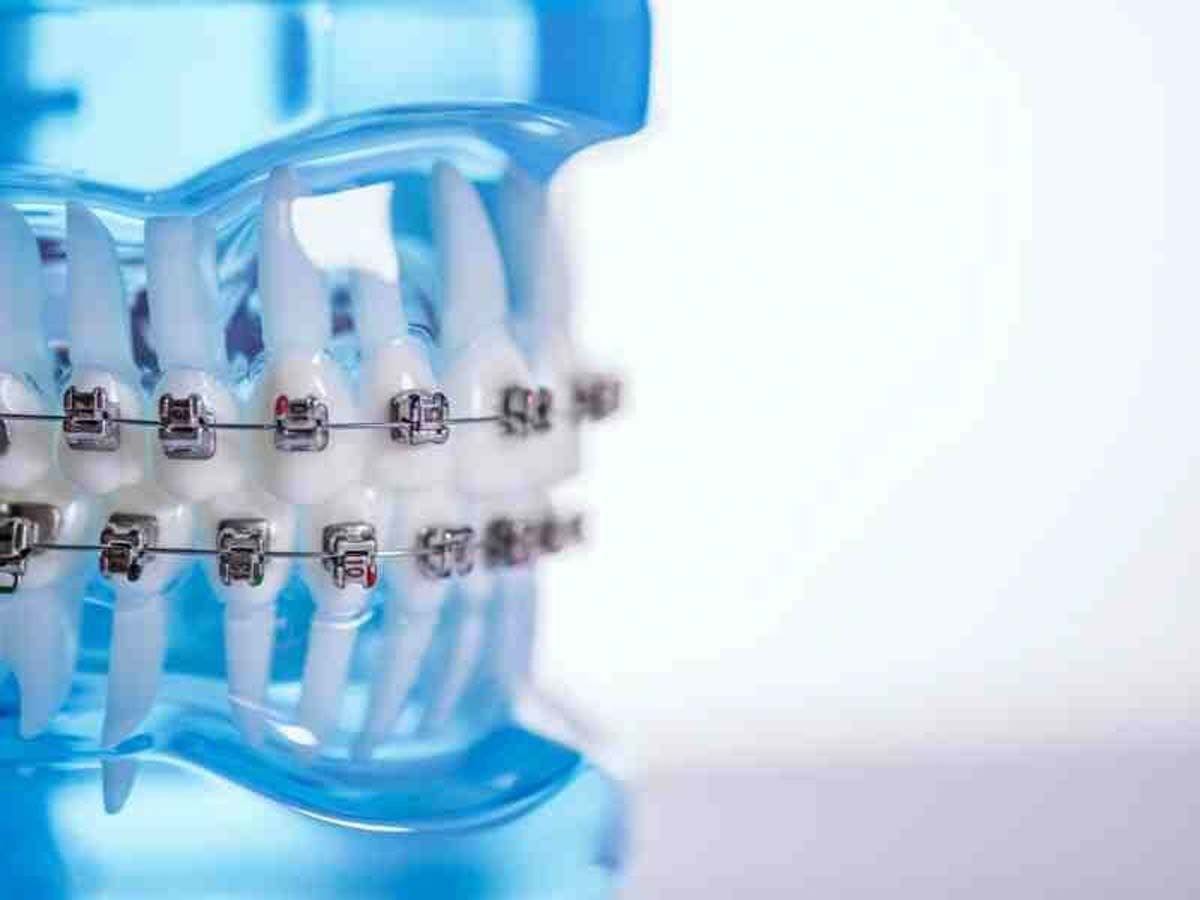
More comprehensive fixed orthodontics to level a deep bite, close an open-bite, or correct a transverse or A-P discrepancy—all in the interests of better prosthetic preparation.
Comprehensive orthodontics with the incorporation of TADs (temporary anchorage devices) for pre-prosthetic solutions limited only by your imagination.
Comprehensive orthodontics including orthognathic surgery to improve jaw relationships prior to tooth replacements.